The 2026 Primary Calendar: Which States Have Voted (and Who’s Next)?
- Independent Times News

- May 20
- 3 min read
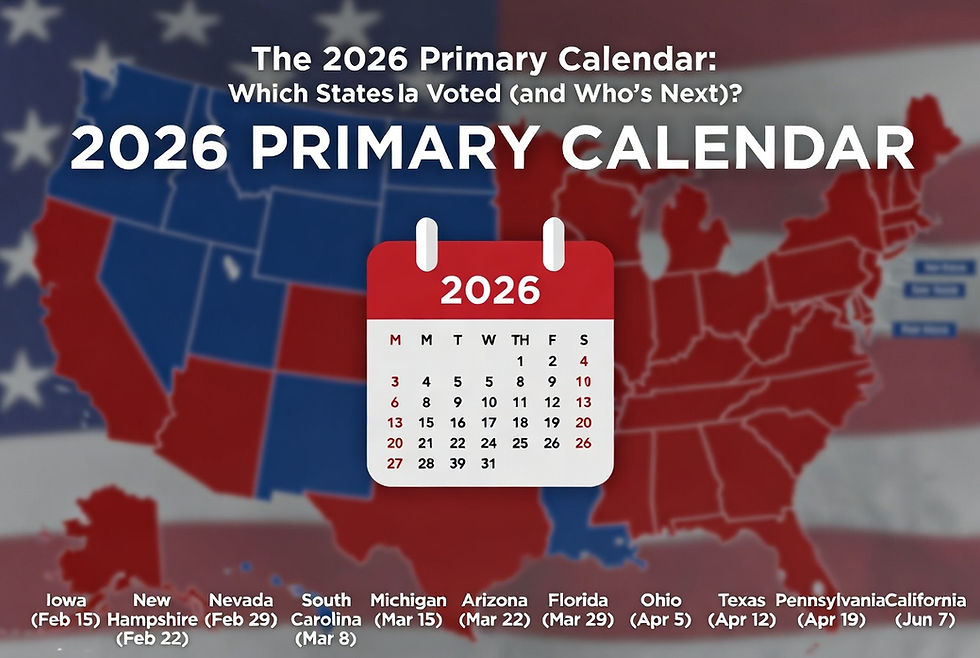
Primaries: Where Your November Choices Are Made
Primaries are one of the most important, and most overlooked, parts of the election cycle.
November is when the final winners are chosen, but the primaries are where the options get narrowed down. These contests decide which Democratic and Republican candidates will actually appear on your ballot in the fall.
In 2026, primaries run from early March through September. Super Tuesday on March 3 was one of the biggest days of the year, with multiple states voting at once.
We’ve now moved past the spring wave and are entering the high-stakes summer stretch.Here’s exactly where the 2026 primary calendar stands right now.
The Spring Wave (Already in the Books)
The primary season kicked off with a bang back in March, with heavy-hitting states like Texas, North Carolina, and Illinois locking in their general election matchups early.
Throughout May, the pace accelerated significantly. Voters across a wide swath of the country, including Georgia, Pennsylvania, Indiana, Ohio, Kentucky, and Oregon, headed to the polls. You can track how those early races shook out on the NPR 2026 Primary Election Results tracker. If you live in these states, your November matchups are already officially set.
The Summer Gauntlet (What’s Ahead)
If you think the action is over, buckle up. June is historically the busiest month of the entire primary cycle, and August holds the keys to some of the most competitive swing states in the nation. To map out your own summer calendar, you can view the full Bipartisan Policy Center 2026 state primary schedule.
Here is how the remaining primary calendar shapes up for the rest of 2026:
Month | Key States on the Clock | What’s at Stake? |
June | California, Iowa, Montana, New Jersey, New Mexico, South Dakota, Nevada, Maine, New York, Maryland | The House Majority Battlegrounds: June is packed with states featuring dense, highly competitive congressional districts especially California and New York that will draw massive national spending. |
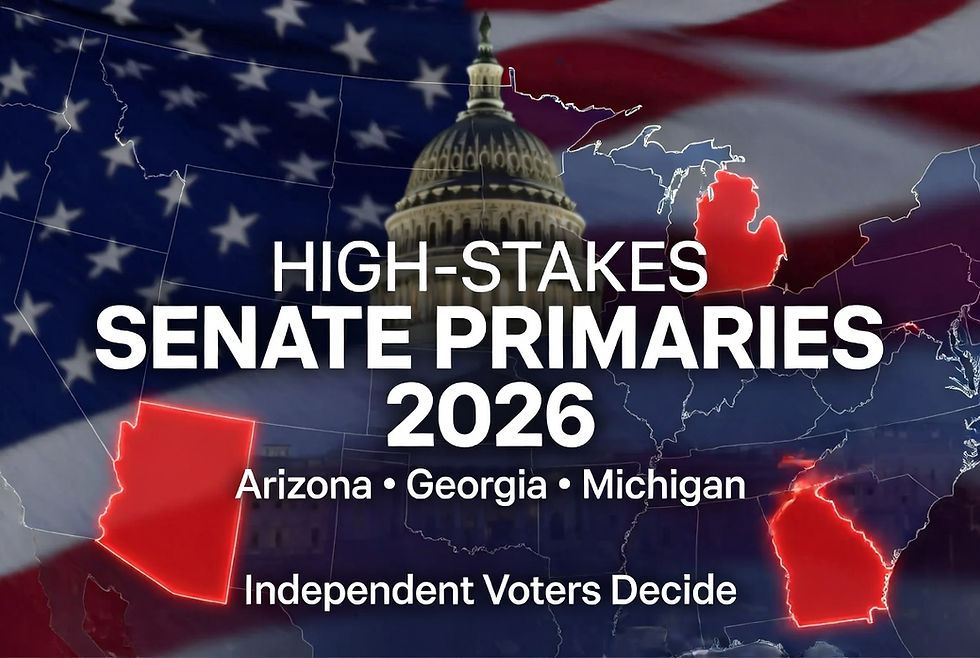
August | Arizona, Michigan, Missouri, Washington, Kansas, Tennessee, Wisconsin, Minnesota, Florida | The Swing-State Showdowns: Late summer brings crucial battles in core battlegrounds like Arizona, Michigan, and Wisconsin, plus Florida's high-profile special Senate primary. |
September | Massachusetts, New Hampshire, Rhode Island, Delaware | The Final Sprint: The New England block closes out the primary calendar, locking in the final ballots just weeks before early voting begins for the general election. |
Why Voting in Your Primary Matters
Primary turnout is usually dismal, often just 15–20% of registered voters. That means a small, motivated group ends up choosing the candidates who appear on the November ballot.If you’re an independent or unaffiliated voter, you might assume primaries don’t involve you. That’s a costly myth.
Depending on where you live, you may have more power than you realize:
Open Primaries (about 14–15 states)
You can vote in either the Democratic or Republican primary, no matter how you’re registered. Just ask for the ballot you want on Election Day.
Semi-Open / Semi-Closed Primaries (about 10–15 states)
Registered independents can choose either party’s ballot. Only voters registered with a party are locked into their own.
Closed Primaries (about 12–13 states)
This is the most restrictive system. You must be registered with a party to vote in that party’s primary. This setup locks out roughly 27 million independent and unaffiliated voters nationwide from participating in major-party primaries. The workaround? In most closed-primary states, you can switch your party registration online relatively easily, often up until a few weeks before the election.
As we head into the big June primary block, Independents have a real opportunity to shape the future of Congress. By participating in primaries, you can help elect moderate candidates who are willing to work across the aisle rather than reward extreme partisanship. Don't sit on the sidelines, look up your state's primary rules, and make your voice count.
Follow us on social media @IndTimesNews for live primary results, key race updates, independent voter trends, and the latest shifts in the 2026 battle for Congress.
Independent Times News
News & Action Built For Independent Voters
Follow: @IndTimesNews
Podcast: Independent Times News (Available on all platforms)
Website: www.IndTimes.news
These are not the best of times, nor the worst, but these are undoubtedly Independent Times.
Comments